
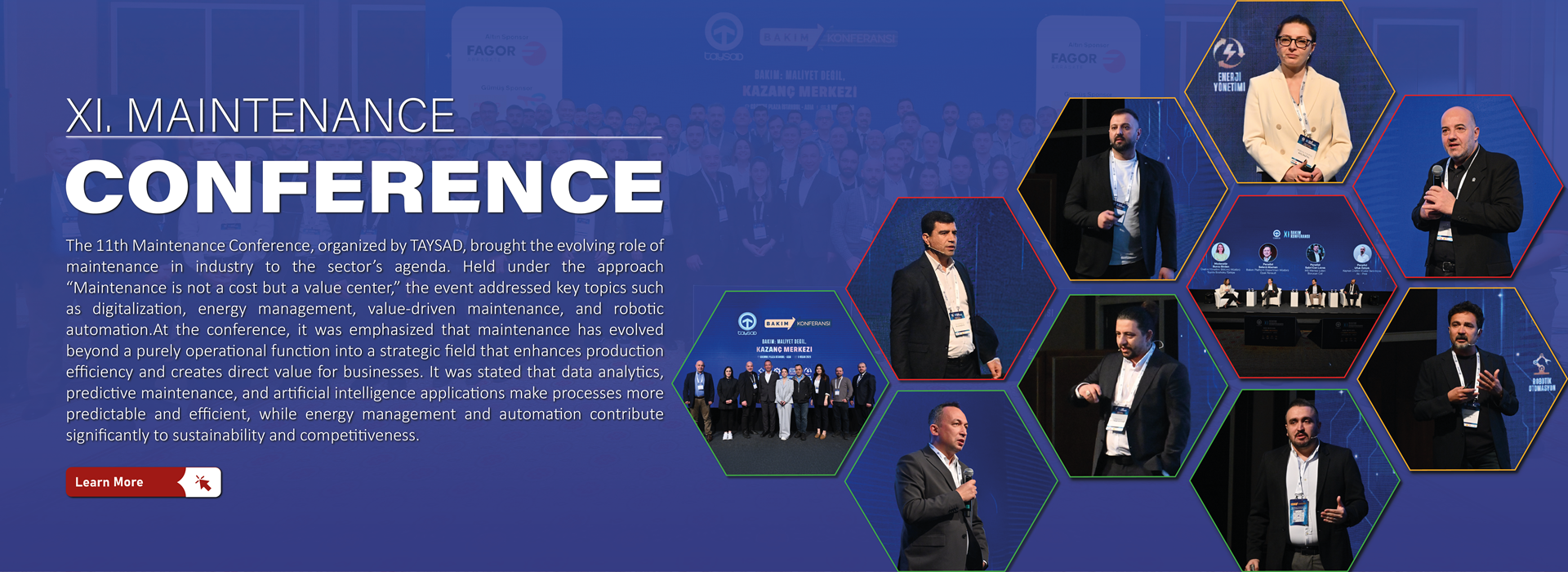
The impact of digitalization, energy management, profit-driven maintenance, and robotic automation on the evolving role of maintenance was discussed at the TAYSAD 11th Maintenance Conference.
The path to uninterrupted production lies in smart maintenance practices
The 11th Maintenance Conference, organized this year by the Automotive Suppliers Association of Türkiye (TAYSAD), the umbrella organization of the automotive supply industry, brought the rapidly evolving understanding of maintenance in industry to the sector’s agenda. At the conference, held under the approach of “Maintenance: Not a cost, but a profit center,” the impact of digitalization, energy management, and robotic automation on maintenance processes was comprehensively evaluated. The event explored from different perspectives how maintenance has become a strategic function that enhances production efficiency and directly creates value for businesses.
In his opening speech, TAYSAD Vice Chairman of the Board Berke Ercan emphasized that maintenance is assuming an increasingly strategic role in industry, stating:
“Thanks to digitalization and data-driven approaches, maintenance processes have become more predictable and efficient. Artificial intelligence has been the most important building block of this transformation.”
As the sole and most competent representative of the automotive supply industry, TAYSAD successfully held its 11th Maintenance Conference in Istanbul with strong participation. The conference, organized to emphasize the importance of continuity in production and to support professional development, featured expert speakers in their fields. Today, maintenance stands out as a strategic area that directly impacts production performance and creates value for businesses. This transformation and the new approach it has brought to the sector formed the main theme of the conference. The 11th Maintenance Conference addressed how maintenance processes have evolved into a value-creating domain for businesses, with the participation of industry professionals.
Maintenance in industry is being reshaped through digitalization
At the conference—gold-sponsored by Fagor Türkiye, silver-sponsored by Fanuc and TotalEnergies, and thematically sponsored by ABB—digitalization emerged as a key focus. In addition, data analytics, predictive maintenance practices, and the new capabilities brought by smart systems to maintenance management were discussed in detail. Participants had the opportunity to examine, through various examples, how digital transformation makes maintenance processes more predictable, efficient, and sustainable.
Energy management was another key topic of the conference. The critical role of maintenance in increasing energy efficiency in production processes and optimizing resource utilization was emphasized. The cost advantages and sustainability contributions of energy-focused maintenance approaches were discussed through industry case examples.
Robotic automation also stood out as another major topic shaping the future of maintenance processes. With increasing automation on production lines, maintenance processes and new dimensions of human-machine collaboration were addressed with a holistic approach.
The concept of profit-driven maintenance was another highlight of the conference. It was emphasized that maintenance is not merely a cost factor, but an investment area that creates value for businesses when managed with the right strategies. The contributions of planned and proactive maintenance practices to production continuity, cost optimization, and competitiveness were shared with participants.
Maintenance processes directly impact production performance
In his opening remarks, TAYSAD Vice Chairman Berke Ercan stated:
“Maintenance is no longer a structure limited to post-failure intervention or preventive activities; it is transforming into a strategic function positioned at the center of processes—from design of production systems to automation, from digitalization to data management. Today, maintenance teams need to be involved from the design phase of processes to contribute to building more efficient, more sustainable, and more competitive structures.
Especially under current economic conditions, rising labor costs, and global competition, businesses are being forced to operate more efficiently, making maintenance a direct value-creating function. At a time when energy costs are increasingly impacting businesses, the steps taken also contribute to our sustainability goals.”
Data collection from the field is becoming widespread
Highlighting the critical importance of maintenance processes in terms of production efficiency, energy management, and operational sustainability, Ercan continued:
“Today, data collection from the field, sensor technologies, and MES applications are widely used in many companies. However, processing and interpreting this data correctly is becoming increasingly critical. At this point, artificial intelligence will be one of the most decisive factors in maintenance processes in the coming period.
While digitalization and data-driven approaches make maintenance processes more predictable and efficient, artificial intelligence stands out as one of the most important elements of this transformation. On the other hand, robotic automation has become an indispensable part of production processes. When all these elements come together, we clearly see that maintenance is evolving into a structure that directly determines competitiveness and creates value for businesses.
As TAYSAD, through our working group in this field, we closely follow digital transformation and aim to support our industry by contributing to the transformation of maintenance from a cost item into a value-creating function.”
“An inspiring event for the sector”
In his closing speech, TAYSAD Board Member and Maintenance Working Group Leader Selçuk Demirok said:
“As TAYSAD, observing the operations carried out by our members, their achievements, and the point we have reached once again demonstrates how strong and strategic our industry is. The support of our sponsors and the dedicated efforts of our professional teams were instrumental in achieving the success of this conference.
Through this event, we reinforced confidence in the future of the automotive supply industry while once again emphasizing the critical role of knowledge sharing and collective learning in the development of our sector. Thanks to the contributions of our participants, working groups, and sponsors, the conference was completed as both an inspiring and guiding platform for our industry. We are already looking forward to meeting again at the 12th Maintenance Conference.”
Industry professionals evaluated the future of maintenance from multiple perspectives
Following the opening speech, GKN Automotive Global Lean Director Gökhan Pişkin and Koç Digital Data Science Manager Ayşegül Turupcu delivered presentations under the “Digitalization” theme.
In the “Profit-Driven Maintenance” panel, moderated by Toyota Boshoku Türkiye Production Management General Manager Burcu Birden, Oyak Renault Maintenance Platform Department Manager Selami Ataman, Borusan Cat MS Center Leader Sabri Can Locva, and Ak-Press Welding Production Deputy Manager Ufuk Öztürk shared their insights.
In the “Energy Management” session held after the lunch break, Olgun Çelik Mechanical Systems Maintenance Leader Hasan Özbilgin and OSB Martur Maintenance Leader Ali Hançer delivered their presentations.
In the “Robotic Automation” session, Beyçelik Gestamp Maintenance Manager Ömer Pala and Bosch Special Machinery Manufacturing Production Section Manager Mert Sağlam shared their views.
The event, which saw strong participation, concluded with the closing speech by TAYSAD Board Member and Maintenance Working Group Leader Selçuk Demirok.
The path to uninterrupted production lies in smart maintenance practices
The 11th Maintenance Conference, organized this year by the Automotive Suppliers Association of Türkiye (TAYSAD), the umbrella organization of the automotive supply industry, brought the rapidly evolving understanding of maintenance in industry to the sector’s agenda. At the conference, held under the approach of “Maintenance: Not a cost, but a profit center,” the impact of digitalization, energy management, and robotic automation on maintenance processes was comprehensively evaluated. The event explored from different perspectives how maintenance has become a strategic function that enhances production efficiency and directly creates value for businesses.
In his opening speech, TAYSAD Vice Chairman of the Board Berke Ercan emphasized that maintenance is assuming an increasingly strategic role in industry, stating:
“Thanks to digitalization and data-driven approaches, maintenance processes have become more predictable and efficient. Artificial intelligence has been the most important building block of this transformation.”
As the sole and most competent representative of the automotive supply industry, TAYSAD successfully held its 11th Maintenance Conference in Istanbul with strong participation. The conference, organized to emphasize the importance of continuity in production and to support professional development, featured expert speakers in their fields. Today, maintenance stands out as a strategic area that directly impacts production performance and creates value for businesses. This transformation and the new approach it has brought to the sector formed the main theme of the conference. The 11th Maintenance Conference addressed how maintenance processes have evolved into a value-creating domain for businesses, with the participation of industry professionals.
Maintenance in industry is being reshaped through digitalization
At the conference—gold-sponsored by Fagor Türkiye, silver-sponsored by Fanuc and TotalEnergies, and thematically sponsored by ABB—digitalization emerged as a key focus. In addition, data analytics, predictive maintenance practices, and the new capabilities brought by smart systems to maintenance management were discussed in detail. Participants had the opportunity to examine, through various examples, how digital transformation makes maintenance processes more predictable, efficient, and sustainable.
Energy management was another key topic of the conference. The critical role of maintenance in increasing energy efficiency in production processes and optimizing resource utilization was emphasized. The cost advantages and sustainability contributions of energy-focused maintenance approaches were discussed through industry case examples.
Robotic automation also stood out as another major topic shaping the future of maintenance processes. With increasing automation on production lines, maintenance processes and new dimensions of human-machine collaboration were addressed with a holistic approach.
The concept of profit-driven maintenance was another highlight of the conference. It was emphasized that maintenance is not merely a cost factor, but an investment area that creates value for businesses when managed with the right strategies. The contributions of planned and proactive maintenance practices to production continuity, cost optimization, and competitiveness were shared with participants.
Maintenance processes directly impact production performance
In his opening remarks, TAYSAD Vice Chairman Berke Ercan stated:
“Maintenance is no longer a structure limited to post-failure intervention or preventive activities; it is transforming into a strategic function positioned at the center of processes—from design of production systems to automation, from digitalization to data management. Today, maintenance teams need to be involved from the design phase of processes to contribute to building more efficient, more sustainable, and more competitive structures.
Especially under current economic conditions, rising labor costs, and global competition, businesses are being forced to operate more efficiently, making maintenance a direct value-creating function. At a time when energy costs are increasingly impacting businesses, the steps taken also contribute to our sustainability goals.”
Data collection from the field is becoming widespread
Highlighting the critical importance of maintenance processes in terms of production efficiency, energy management, and operational sustainability, Ercan continued:
“Today, data collection from the field, sensor technologies, and MES applications are widely used in many companies. However, processing and interpreting this data correctly is becoming increasingly critical. At this point, artificial intelligence will be one of the most decisive factors in maintenance processes in the coming period.
While digitalization and data-driven approaches make maintenance processes more predictable and efficient, artificial intelligence stands out as one of the most important elements of this transformation. On the other hand, robotic automation has become an indispensable part of production processes. When all these elements come together, we clearly see that maintenance is evolving into a structure that directly determines competitiveness and creates value for businesses.
As TAYSAD, through our working group in this field, we closely follow digital transformation and aim to support our industry by contributing to the transformation of maintenance from a cost item into a value-creating function.”
“An inspiring event for the sector”
In his closing speech, TAYSAD Board Member and Maintenance Working Group Leader Selçuk Demirok said:
“As TAYSAD, observing the operations carried out by our members, their achievements, and the point we have reached once again demonstrates how strong and strategic our industry is. The support of our sponsors and the dedicated efforts of our professional teams were instrumental in achieving the success of this conference.
Through this event, we reinforced confidence in the future of the automotive supply industry while once again emphasizing the critical role of knowledge sharing and collective learning in the development of our sector. Thanks to the contributions of our participants, working groups, and sponsors, the conference was completed as both an inspiring and guiding platform for our industry. We are already looking forward to meeting again at the 12th Maintenance Conference.”
Industry professionals evaluated the future of maintenance from multiple perspectives
Following the opening speech, GKN Automotive Global Lean Director Gökhan Pişkin and Koç Digital Data Science Manager Ayşegül Turupcu delivered presentations under the “Digitalization” theme.
In the “Profit-Driven Maintenance” panel, moderated by Toyota Boshoku Türkiye Production Management General Manager Burcu Birden, Oyak Renault Maintenance Platform Department Manager Selami Ataman, Borusan Cat MS Center Leader Sabri Can Locva, and Ak-Press Welding Production Deputy Manager Ufuk Öztürk shared their insights.
In the “Energy Management” session held after the lunch break, Olgun Çelik Mechanical Systems Maintenance Leader Hasan Özbilgin and OSB Martur Maintenance Leader Ali Hançer delivered their presentations.
In the “Robotic Automation” session, Beyçelik Gestamp Maintenance Manager Ömer Pala and Bosch Special Machinery Manufacturing Production Section Manager Mert Sağlam shared their views.
The event, which saw strong participation, concluded with the closing speech by TAYSAD Board Member and Maintenance Working Group Leader Selçuk Demirok.

Countdown for Automotive Industry, International Automotive Engineering Conference (IAEC) 2026!
25 August 2026, Tuesday 13:14
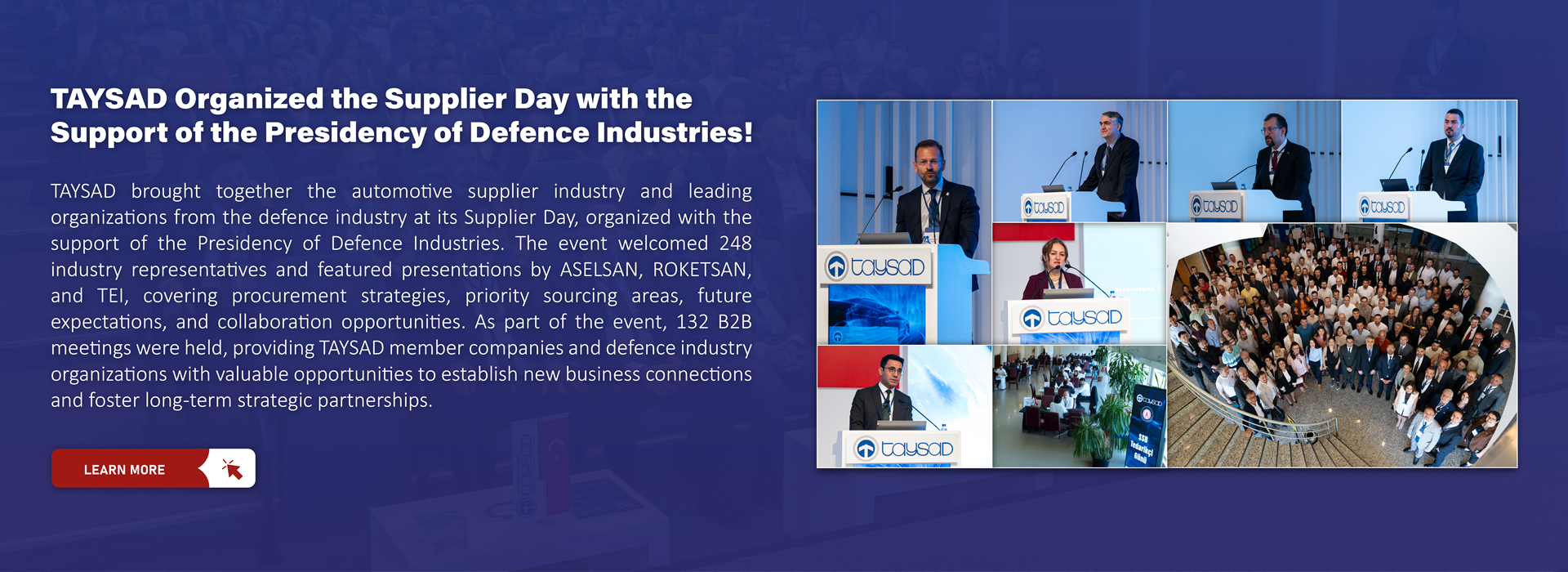
TAYSAD Organized the Supplier Day with the Support of the Presidency of Defence Industries
01 July 2026, Wednesday 15:53
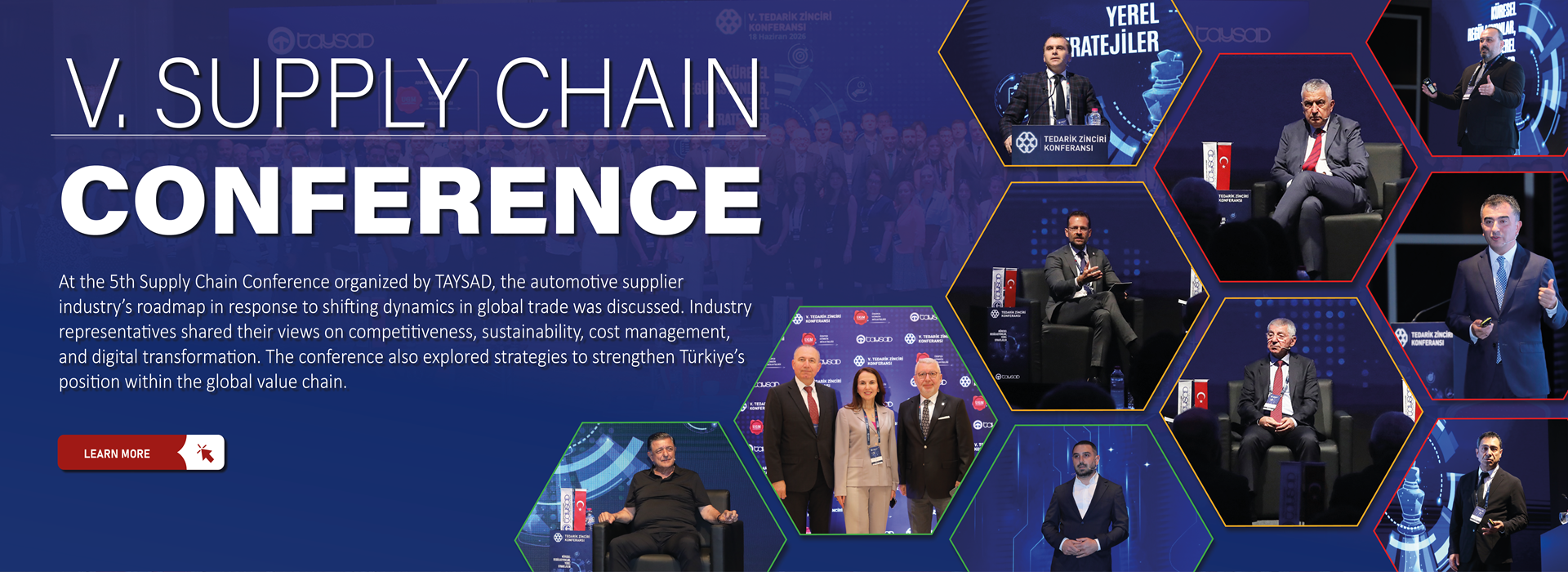
TAYSAD Addresses Future Strategies of the Automotive Supply Industry at Its 5th Supply Chain Conference
23 June 2026, Tuesday 17:06
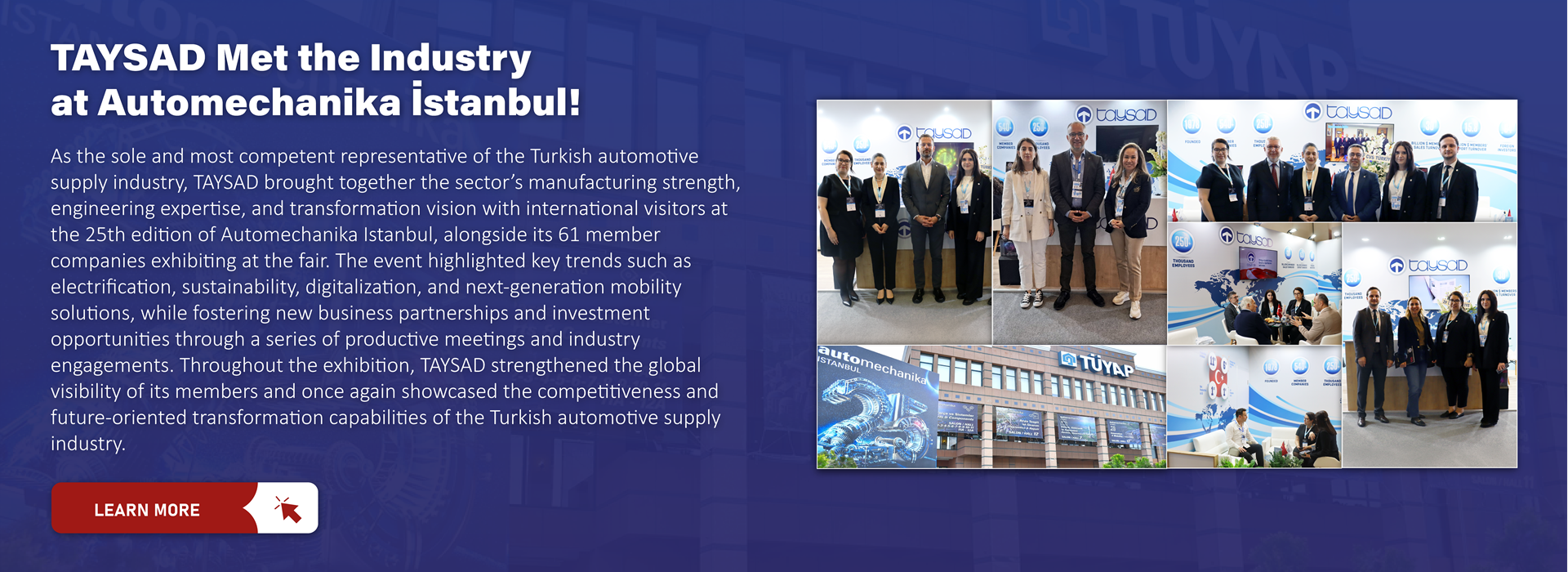
TAYSAD Meets the Industry at Automechanika İstanbul
01 June 2026, Monday 11:58
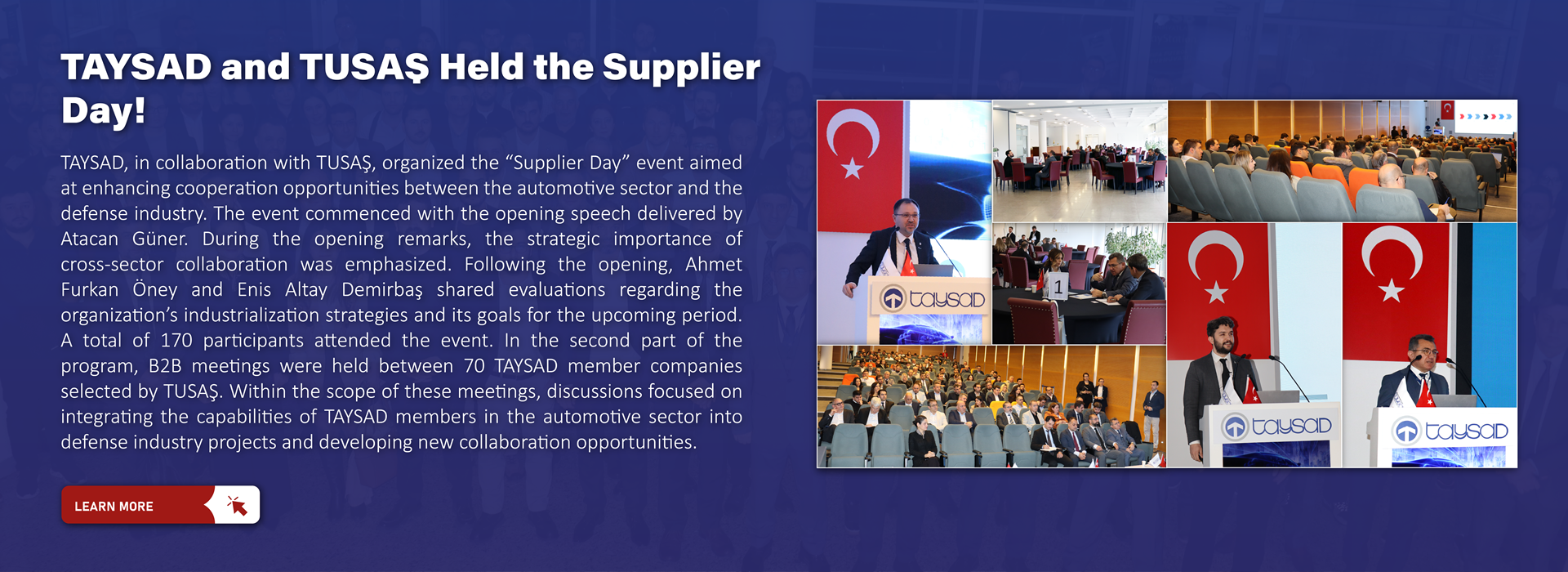
TAYSAD and TUSAŞ Held the Supplier Day Event
13 April 2026, Monday 13:40